Sunday, October 23, 2011

Saturday, October 22, 2011

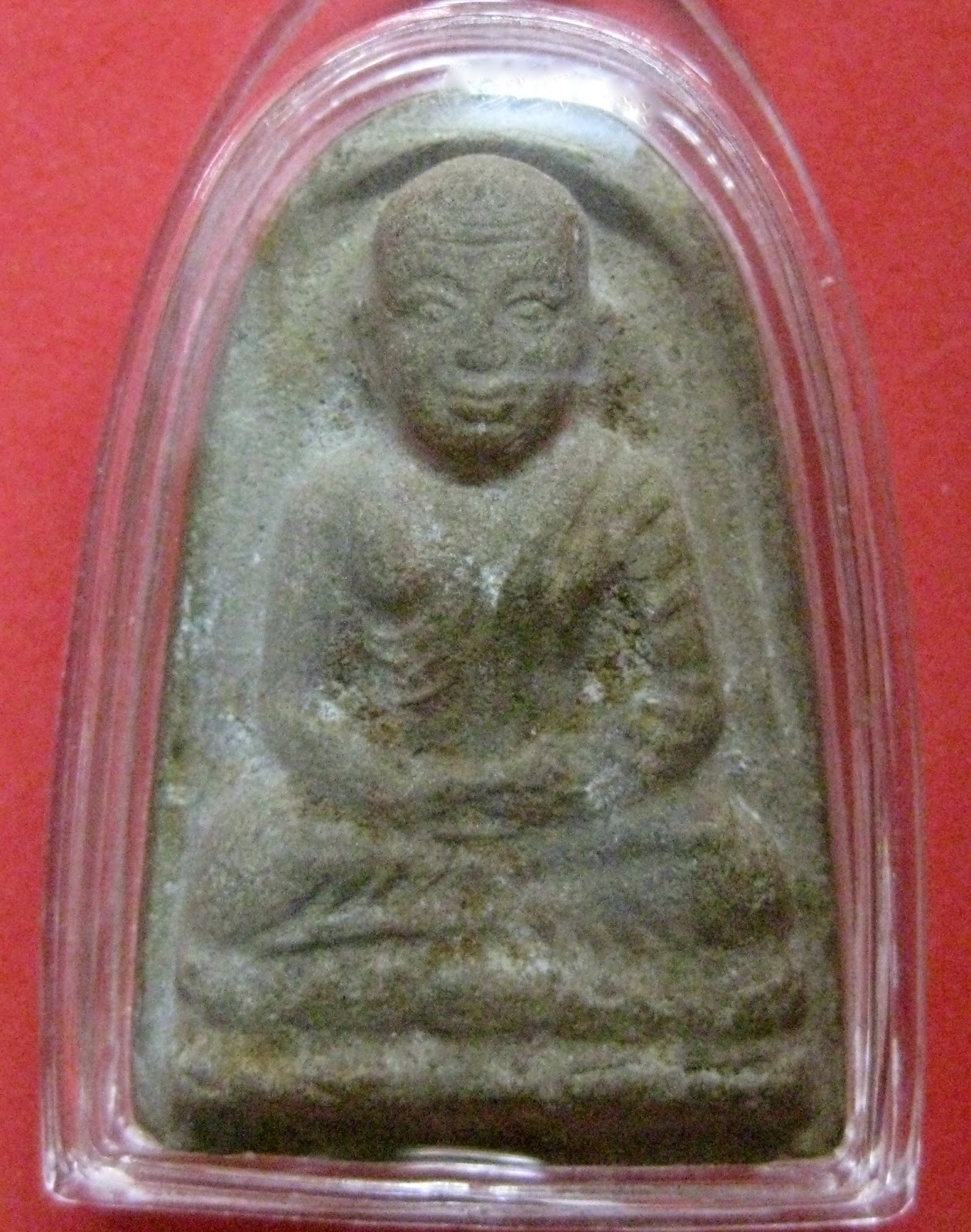
Meed Moh


8" in length


By: Phra Arjan Luang Nuii
Wat Kor Hong, Songkhla
B.E. 2548 / 1st Batch
*For Show*

Friday, October 21, 2011

Tarkut_Phra Jatukam-Maha Luay (Great Wealth)


*Silver Tarkut*
By: Phra Arjan Luang Nuii
Wat Kor Hong, Songkhla
B.E. 255x
*For Show*

Luang Phor Kong


*Phra_Lau Yuk Liao*
Wat Ban Suan, Phattalung
B.E. 2520 / *Pim Kamakan*

Interested pls SMS +65 9276 7665

Thursday, October 13, 2011

Toh Rajah / Luang Pu Kron (Nur Waan Chan_Mak)

*For Show*
Wat Bangsek, Kelantan
B.E. 2505
*To be believe that this amulet are chanted / made by L.P. Kron. As Research Showed_chanted from B.E. 2503 - 2505, L.P. Kron passed away in B.E. 2505_November*

Phra Hanuman _Roop Lor (Nur Nawat)


*Back with Three-headed Hanuman*
By: Luang Phor Mee
Wat Mun Wichai, Ayutthaya
B.E. 2535 / 1st Batch
Made: 3,099 pcs / *Sold*

Thursday, October 6, 2011

Phra Pidta_Phan Pha Gan


By: Luang Phor Kant & Arjan Khun Phan etc . . .
Wat Kao Or, Phattalung
B.E. 2544 / *Sold*

Luang Phor Padt Thon


Wat Kork Soong, Songkhla
B.E. 2519 / 1st Batch
*Sold*

Luang Phor Padt Thon


Wat Kork Soong, Songkhla
B.E. 2519 / 1st Batch
*Sold*

Phra Pidta_Mini Size


By: Luang Phor Kloy
Wat Phu Kao Thong, Phattalung
B.E. 2553 / *Sold*

Somdej Toh & L.P. Tuad_Met Tang


 L.P. Tuad of Wat Chang Hai, Pattani
Somdej Toh of Wat Rakang, Bangkok
By: Luang Phor Thong
Wat Samphaoche, Pattani
B.E. 2540 / *Sold*

Phra Phothijat (Nur Din)


By: Luang Phor Lee
Wat Asokaram, Samut Prakan
B.E. 2500 / *For Show*

Monday, October 3, 2011

Phra Jatukam_Pim Yai

*องค์พ่อจตุคามรามเทพ รุ่นเจ้าสัว วัดคอหงษ์ อ.หาดใหญ่ จ.สงขลา ปี 2548*
Nur Phong Prasom_Mai Takien
By: Phra Arjan Luang Nuii
Wat Kor Hong, Songkhla
B.E. 2548 / Roon_Chao Sua
*For Show*

Lay People Precepts

   Anyone, of any religion or none, can appreciate these fundamental, practical guidelines about actions & speech suggested by the Buddha.
   When we are mindful enough to realize that we have a choice about our actions & speech, these Precepts are there to help answer questions of,"What should I do, what should I say?"
   They are practical & down to earth without requiring one to promise first to believe in anything supernatural.
   Like the lane makings on the highway, they help speed one on one's journey without colliding with any other travellers or going completely off the road.
   The Precepts mark the straightforward way of living that harms or hurts no one, while offering one the choice to transform one's life through growing mindfulness into prefect virtue, wisdom & compassion.

The Five Precepts

   The Five Precepts form one of the essential attributes of following the Lord Buddha's Way.Undertaking these Precepts (and 'Going for Refuge') are often the first formal affirmation of a new Buddhist.This is normally done by repeating after a monk these phrases ( in Pali):

"I undertake the training precept:
   1) to abstain from taking life.
   2) to abstain from taking what is not given.
   3) to abstain from sexual misconduct.
   4) to abstain from false speech.
   5) to abstain from intoxicants causing heedlessness."

The Eight Precepts

   The Five can then be refined into the Eight Precepts:

"I undertake the training precept...
   1) to abstain from taking life.
   2) to abstain from taking what is not given.
   3) to abstain from unchastity.
   4) to abstain from false speech.
   5) to abstain from intoxicants causing heedlessness.
   6) to abstains from untimely eating.
   7) to abstain from dancing, singing, music & unseemly shows, from wearing garlands, smartening with scents, and beautifying with perfumes.
   8) to abstain from the use of high & large luxurious couches."

Karaniya Metta Sutta


The discourse on Loving Kindness
   The Karaniya Metta Sutta or commonly known as the Metta Sutta (loving kindness) is part of the teachings left by Lord Buddha in the Pali canon.

What is this Sutta and the advantages from it?

   During the time of Buddha,there was a group of monks who found a nice conducive sanctuary within the forest for them to practice and meditates.The guardian spirits of the forest at first welcome the virtuous monks to stay in the part of their forest.The monks then decided they will stay for another 3 months to pass their Pansa (rain retreat).

   It was then to the awareness of these spirits and they are not so please with the monks overstaying.The spirit deities create all sort of menacing disturbances such as ghastly sounds,screams and fearful visions to frighten the monks every nights.

   In the despair they pray to the Blessed One for guidance.Lord Buddha with his limitless awareness knows about this and through his psychic powers,he instructed the monks to start on no matter what as he foresees the monks will get enlightened if the push on their practice in the forest.He also teaches the monks the Karaniya Metta Sutta and ask them to chant in it in their every mindful moments.

   Instead of contesting and challenging the master of domain,the monks use the pacifist approach of radiating great loving kindness energies with their sincere chanting of Karaniya Metta Sutta to the annoyed deity guardians.Gradually, these bothersome spirits were appeased by the peaceful and benevolence approach of the monks and the chanting thus they cease their disturbances.Instead of disturbing the monks,they came forward to help them in various ways.At the end of the Pansa,all the monks achieved arahantship as foresee by the Enlightened One.

   This shows how Metta can be used to overcome all enmity.

   As told by Lord Buddha himself,there are 11 advantages from practicing th Karaniya Metta Sutta;

   "One sleeps easily,wakes easily,dreams no evil dreams. One is dear to human beings,dear to non-human beings. The devas protect one. Neither fire,poison,nor weapons can touch one. One's mind gains concentration quickly. One's complexion is bright. One dies unconfused and if fails to attain arahantship,shall headed for the Brahma worlds.

   "These are the eleven benefits that can be expected for one whose awareness release through good will is cultivated,developed,pursued,handed the reins and taken as a basis,given grounding,steadied,consolidated,and well undertaken."

   One should and practice the Karaniya Metta Sutta and it will come especially useful when faced with great hostility and resentment. Practicing  it will resolve and dissipate and enmity and will turn foes into friends and friends into supporters.

   Practice it with the mindfulness of the mind,speech and body and may harmony be with all sentinel beings.

Tod Kartin (Ork Phansa)


Tod Kratin - lasts for 30 days,from Ork Phansa through to the full month of the twelfth month of the Buddhist lunar year. During this time most Buddhists take part in ceremonies,either directly or indirectly. Robes & other necessities of temple life are offered ceremoniously to the monks on an appointed day. Each temple may hold a Tod Kartin ceremony once each year. Originally,in the time of the Lord Buddha,this ceremony was meant to teach monks humility & show them how to cut,sew, & dye the robes for themselves. The finished robes were then offered to the members of the company deemed most suitable. Today,however,the ritual has evolved dramatically into a grand celebration where hundreds & thousands of people join in the merit making. It is also an important occasion for the temple to raise funds. The sequence of events for each of the above three religious days goes something like this: Early in the morning,people begin to arrive at the temple wearing their best clothes. They carry food prepared at home,usually in highly decorative gold or silver bowls,& offer it to the monks. After this breakfast,the people are blessed by the monks & many return to their homes. The more devoted may choose to remain at the temple &,later in the morning,take a vow with the monks to keep either five or eight precepts throughout the entire day. After taking this vow,they split their time between praying,listening to the monks' preachings &  doing meditation. In the evening,the monks lead a candlelit procession,making three complete circuits of the main temple building. This event signifies the end of the celebrations.

The Buddhist Calendar


Visakha Puja - falls on the full moon of the sixth month of the lunar year (around the middle of May on the international calendar). It is one of the most important days for Buddhists because on this day the Lord Buddha was born, attained enlightenment, and died. All three of these significant events fell on the same day. Visakha Puja is usually celebrated with a public sermon during the day and a candle lit procession to pay respect to the Lord Buddha during the night.
Magha Puja - falls on the full moon of the third lunar month ( February). It was on this day that 1,250 enlightened monks converged to pay respect to the Lord Buddha without any prior appointment. The day is celebrated in a similar fashion to Visakha Puja day.Asalha Puja - falls on the full moon of the eighth lunar month (July) and is also very important. It was on this day that the Lord Buddha preached His sermon to followers after attaining enlightenment. The day is usually celebrated by merit making, listening to a monk’s sermon, and joining a candle lit procession during the night.Procession
Khao Phansa - falls on the first day after the full moon of the eighth lunar month (July) and marks the beginning of the three-month Buddhist ‘lent’ period. At this time, all monks and novices must remain in their temples. They should not venture out or spend the night in any other place except in cases of extreme emergency and, even then, their time away must not exceed seven consecutive nights. This is a time for serious contemplation and meditation for both monks and laymen alike. Traditionally, it is also important for laymen to ordain their sons into the monkhood on this day to get maximum benefit from the Buddhist teachings.
Ork Phansa - marks the end of the Buddhist lent and falls on the full moon of the eleventh lunar month (October). This is a day of joyful celebration and merit-making. For many families, it is also the day they welcome a son back into the home and celebrate his successful completion of a term in the temple.
Tod Kratin - lasts for 30 days, from Oak Phansa through to the full moon of the twelfth lunar month. During this time most Buddhists take part in ceremonies, either directly or indirectly. Robes and other necessities of temple life are offered ceremoniously to the monks on an appointed day. Each temple may hold a Tod Kratin ceremony once each year. Originally, in the time of the Lord Buddha, this ceremony was meant to teach monks humility and show them how to cut, sew, and dye the robes for themselves. The finished robes were then offered to the members of the company deemed most suitable. Today, however, the ritual has evolved dramatically into a grand celebration where hundreds and thousands of people join in the merit making. It is also an important occasion for the temple to raise funds.The sequFestival crowdence of events for each of the above three religious days goes something like this: Early in the morning, people begin to arrive at the temple wearing their best clothes. They carry food prepared at home, usually in highly decorative gold or silver bowls, and offer it to the monks. After this breakfast, the people are blessed by the monks and many return to their homes. The more devoted may choose to remain at the temple and, later in the morning, take a vow with the monks to keep either five or eight precepts throughout the entire day. After taking this vow, they split their time between praying, listening to the monks’ preachings and doing meditation. In the evening, the monks lead a candle lit procession, making three complete circuits of the main temple building. This event signifies the end of the celebrations.

Daily Life of a Monk


The Sangha World in Thailand consists of about 200,000 monks and 85,000 novices at most times of the year. However, these numbers increase during the Buddhist ‘lent’ to 300,000 and 100,000 novices. Young boys may become novices at any age, but a man cannot become a monk until he reaches the age of twenty. He can then remain a monk for as long as he wishes, even for just one day. Three months is more usual, although some choose to remain in monkhood for the rest of their lives.
There are over 29,000 temples in Thailand and the daily routine of the monks in all of them is pretty much the same...
4.00 am - The monks wake up and meditate for one hour, followed by one hour of chanting.
6.00 am - The monks walk barefoot around the neighbourhood while the local people make merit by offering them food.
8.00 am - Returning to the temple, the monks sit together to eat breakfast, then make a blessing for world peace.
Before 12.00 noon - Some monks choose to eat a light lunch at this time. This is the last solid food they are allowed to consume until sunrise the following morning.
1.00 pm - Classes in Buddhist teaching begin. Some monks may attend school outside the temple.
6.00 pm - A two-hour session of meditation and prayer begins.
8.00 pm - The monks retire to do homework.

Besides these duties, all monks are given specific roles to play in the day-to-day running and maintenance of the temple and its surroundings.After being in the monkhood for several years and demonstrating extreme dedication to both social work and spiritual study, a monk can be promoted gradually until he reaches the Sangha Supreme Council, the governing body presided over by the Supreme Patriach.
All monks must follow 227 strict precepts or rules of conduct, many of which concern his relations with members of the opposite sex. When a monk is ordained he is said to be reborn into a new life and the past no longer counts - not even if he was married. Women are, of course, forbidden to touch monks and should not even stay alone in the same room as a monk. If a woman wishes to offer an object to a monk, it must pass through a third medium, such as a piece of cloth. In fact, monks always carry a piece of cloth for this purpose. The monk will lay the cloth on the ground or table, holding on to one end. The woman places the offering on the cloth and the monk then draws it away.

Thai monks can be seen wearing various shades of robes, from dark brown to the familiar brilliant saffron. There are no rules, but the darker shades are preferred by monks in the Dharmmayuth sect and Thu-dong or forest monks.